Water Bill Up, But No Visible Leak?
If your water bill has climbed with no obvious cause, or you can hear water running somewhere with every fixture in the house turned off, that's exactly the situation leak detection is built for. Instead of opening up walls or digging up the yard to look, we use equipment that finds a hidden leak's location first, so any digging or wall work that follows is targeted rather than a guess.
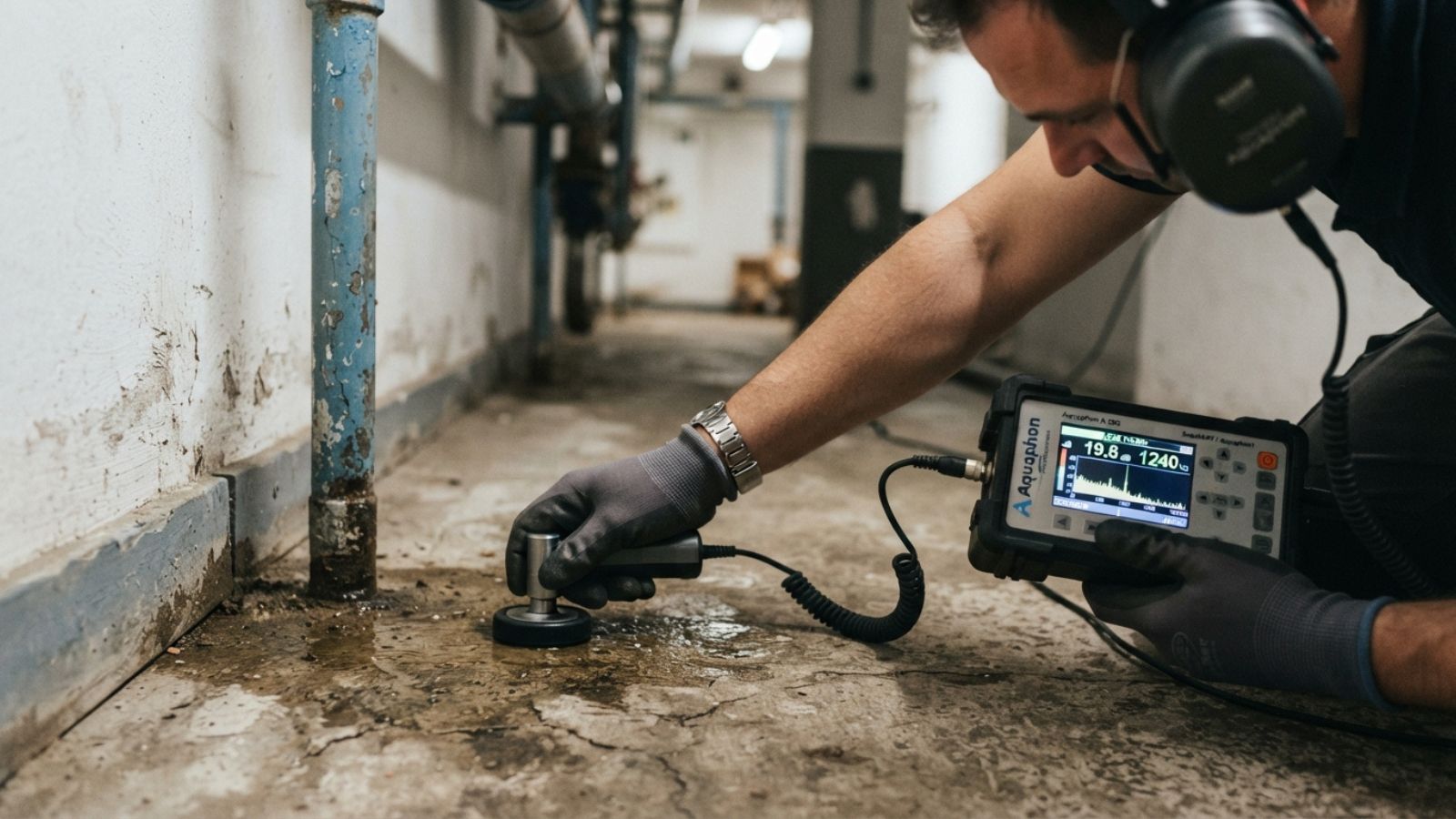
Leak detection in Littleton, CO covers pipes behind walls, under slabs, beneath floors, and in yard or irrigation lines, using acoustic listening equipment and electronic correlation tools rather than opening up your home to search by hand.
How We Actually Find It
Acoustic leak detection listens for the distinct sound a pressurized leak makes as it escapes a pipe, which travels through the pipe material itself and can be picked up well away from the leak's actual location. For non-metallic pipe or noisier environments, correlator equipment compares the sound arriving at two points along the line and calculates the leak's position between them.
A water meter test, shutting off every fixture and watching whether the meter still shows flow, is often the first step, since it confirms whether the leak is on your side of the meter before any specialized equipment comes out. Any repair that follows still has to meet the pipe material and location requirements in your jurisdiction's adopted plumbing code, commonly UPC or IPC, not just stop the water.
Suspect A Hidden Leak?
We find it before we recommend opening anything up.
Common Places Leaks Hide
A leak under a concrete slab is its own specific category, with its own diagnostic approach and repair options, which our slab leak detection and repair page covers in more depth. Leaks in yard or irrigation lines often show up as an unexplained soggy patch of lawn even in dry weather, and a leak behind a wall frequently shows up first as a slightly warm spot on drywall if it's on the hot water line.
What actually changes the price: the leak's likely location (slab, wall, yard, or irrigation line), which detection method applies, and how much follow-up access work is needed once the leak is pinpointed. Want your real number? Call (303) 552-3896.
The Water Meter Test
Shut off every fixture and appliance that uses water, then check whether your water meter's leak indicator, a small triangular or spinning dial on most meters, is still moving. If it is, water is flowing somewhere on your side of the meter even with everything off, which confirms a leak exists before any specialized equipment gets involved. This simple test alone has saved homeowners a service call when the culprit turned out to be a running toilet fill valve rather than a hidden pipe leak.
Common Questions
Will you have to tear up my floor or wall to find the leak?
Not to find it. Electronic and acoustic equipment locates a leak without opening anything up. Some targeted access is usually needed to actually repair it once we know exactly where it is.
How do I know if I have a hidden leak?
An unexplained rise in your water bill, the sound of running water with every fixture off, or a warm or damp spot on a floor or wall with no obvious source are the most common signs.
Can you detect a leak in my irrigation system?
Yes, yard and irrigation line leaks are detected the same way as leaks inside the home, often showing up first as an unexplained soggy patch of lawn.
Is leak detection covered by insurance?
Coverage varies by policy and whether the leak has caused documented damage. We can provide documentation of what we find to support a claim either way.
If the equipment points to a leak specifically under a concrete slab, our slab leak detection and repair page covers that situation and its repair options in detail. If it turns out to be a drain or sewer line issue rather than a supply-line leak, sewer line repair covers that instead. Older homes in Columbine Valley with original copper supply lines are a common source of the pinhole leaks this page describes, covered further on our Columbine Valley plumbing page.