When Cabling Isn't Enough
If a drain snake cleared your clog last month and it's already back, that's usually a sign cabling only punched a hole through the blockage rather than actually clearing the line. Hydro jetting in Littleton, CO uses pressurized water, not a mechanical cable, to scour the entire inside diameter of the pipe, which is why it holds up longer against the exact problems that make cabling a repeat visit.
How It Actually Works
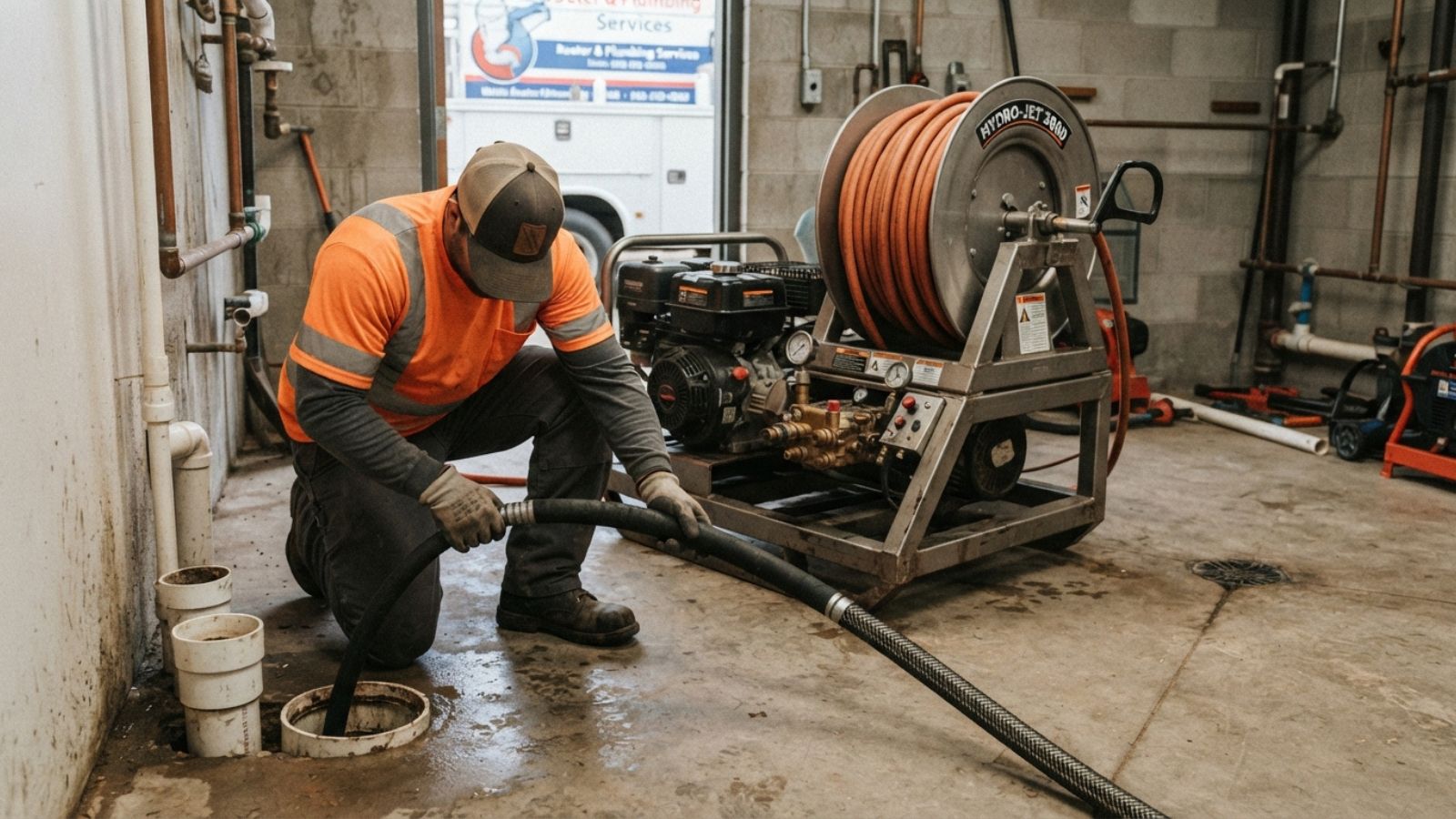
A jetting hose feeds a specialized nozzle through the line, spraying water at 4,000 PSI or higher both forward and backward as it's pulled through. The backward-facing jets pull the hose through the pipe while cutting through grease, sludge, and root intrusion along the entire wall, not just a narrow channel down the middle the way a cable does.
We run a camera inspection before jetting any line with unknown condition or history, since jetting a pipe with an existing crack or collapsed section can push debris into the damage rather than clear it. A camera afterward also confirms the line is genuinely clear, not just quiet for the moment.
Clog Keeps Coming Back?
Hydro jetting clears what cabling only pushes through.
Where It Works Best
Kitchen lines with built-up grease, main sewer lines with root intrusion, and commercial or restaurant drain lines all respond well to jetting specifically because the problem coats the entire pipe wall rather than sitting in one spot. A single isolated object clog, like a foreign item stuck in a toilet trap, doesn't need jetting and is better served by a simple cable or removal.
What actually changes the price: line length and diameter, severity of buildup or root intrusion, whether a camera inspection is needed before and after, and residential versus commercial line access. Want your real number? Call (303) 552-3896.
Cabling Vs. Hydro Jetting
Cabling (Snaking)
- Punches a channel through the clog.
- Faster and cheaper for a single, simple blockage.
- Leaves grease and buildup on the pipe walls.
- Root intrusion typically regrows within weeks.
Hydro Jetting
- Scours the entire pipe diameter, wall to wall.
- Clears grease buildup that cabling leaves behind.
- Holds up longer against root regrowth.
- Requires a camera check on unknown-condition pipe first.
Equipment We Actually Use
Trailer-mounted and truck-mounted jetting units both run the same nozzle technology, with the difference coming down to hose length and water tank capacity for longer commercial runs versus typical residential lines. Nozzle selection matters too, a penetrating nozzle designed to cut through a hard blockage first, then a chisel or root-cutting nozzle to clear the walls once the initial channel is open.
Common Questions
Is hydro jetting safe for older pipes?
It's safe for sound clay, cast-iron, and PVC pipe. We run a camera first on any line with unknown condition, since jetting a pipe with an existing crack can worsen the damage.
How is this different from regular drain cleaning?
Standard cabling clears a channel through a clog. Hydro jetting scours the full pipe diameter, which is why it lasts longer against grease and root intrusion that cabling only pushes past.
Do you jet commercial or restaurant lines?
Yes, grease-heavy commercial and restaurant lines are one of the situations hydro jetting handles best, since the buildup coats the entire pipe wall.
Will jetting damage my pipes?
Jetting sound pipe is safe. The risk is jetting a pipe that's already cracked or collapsed, which is exactly why a camera inspection comes first on any line we don't already know the condition of.
If a camera inspection shows a cracked or collapsed section rather than just buildup, jetting alone won't fix it and our sewer line repair page covers the actual repair options. For a single, simple clog that doesn't need this level of equipment, standard drain cleaning and unclogging is the more cost-effective first step. Older homes in Ken Caryl with mature tree roots are some of the most common candidates for jetting in this network's coverage area, covered further on our Ken Caryl plumbing page.