Tankless Water Heater Service in Littleton, CO
Installation, sizing, descaling, and repair for tankless water heaters, done to the gas and venting specs the unit actually needs.
Never Run Out Of Hot Water Again
If your household keeps running out of hot water mid-shower, or you're tired of waiting for a tank to refill between loads of laundry and dishes, you already know the problem. A tankless water heater solves it by heating water on demand instead of storing a fixed supply, so the only limit is how much hot water you pull at once.
Tankless water heater service in Littleton, CO covers new installation, sizing an existing home correctly, annual descaling, and repair when a unit isn't heating the way it used to. Sizing is the part homeowners get wrong most often when they shop for a unit online, and it's also the part that determines whether you actually stop running out of hot water or just move the same problem to a smaller box on the wall.
Why Littleton Homeowners Switch To Tankless
A tankless unit takes up a fraction of the space of a 40 or 50-gallon tank, which matters in the smaller mechanical closets common in Littleton's condos and townhomes near Historic Downtown. Gas-fired units also cut standby energy loss, since there's no tank of water being kept hot around the clock waiting to be used.
Colorado's cold incoming groundwater temperature is a real factor tankless shoppers don't always hear about upfront. A unit's maximum flow rate drops in winter because it has to work harder to raise cold water to a usable temperature, so a unit rated for 7 GPM in summer might only deliver 5 GPM on a January morning. Sizing for winter groundwater temperature, not the summer spec sheet number, is the difference between a unit that actually keeps up and one that disappoints in February.
Ready To Go Tankless?
We size the unit to your home, not the other way around.
Sizing It Right The First Time
Every tankless unit has a maximum flow rate measured in gallons per minute, or GPM. A shower uses roughly 2.5 GPM and a washing machine roughly 2 GPM, so running both at once needs at least 4.5 GPM from the unit before winter derating even enters the picture. We size for your household's actual simultaneous-use pattern and Littleton's winter groundwater temperature, not just the number of bathrooms.
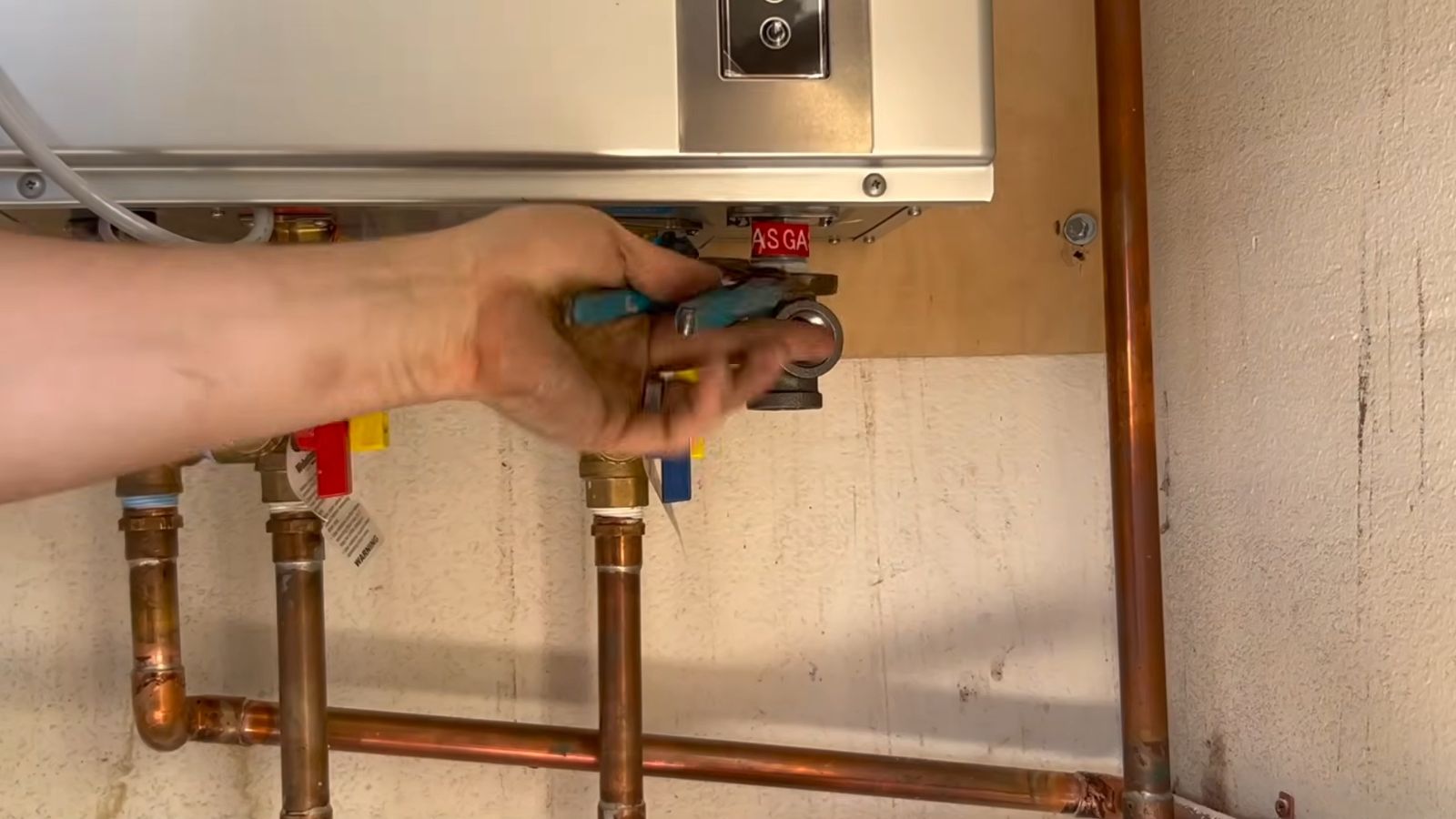
Switching from a tank to a gas tankless unit often means upsizing the gas line and adding proper venting, since a tankless unit's burner draws more gas at once than a standard tank did. That's a real code and capacity check, installed to the plumbing code your jurisdiction has adopted, not an optional upsell, and skipping it is the most common reason a newly installed tankless unit underperforms.
Keeping It Running: Descaling
Front Range mineral content is hard on tankless heat exchangers the same way it's hard on tank units, and scale buildup inside the narrow heat exchanger passages restricts flow and shortens the unit's working life faster than in a standard tank. An annual descale flush, circulating a mild descaling solution through the unit for 30 to 45 minutes, is the single most effective thing a Littleton homeowner can do to protect a tankless investment.
What actually changes the price: the GPM capacity your household needs, whether the existing gas line and venting meet the new unit's spec or need upgrading, whether an old tank needs removal and disposal, and gas vs. electric unit type. Want your real number? Call (303) 552-3896.
Tank vs. Tankless
Storage Tank
- Hot water runs out once the tank is empty.
- Keeps 40 to 50 gallons hot around the clock, even unused.
- Takes up a full closet or utility room footprint.
- Simpler venting in most existing homes.
Tankless
- Continuous hot water within the unit's sized capacity.
- No standby energy loss from keeping stored water hot.
- Compact wall-mounted footprint frees up closet space.
- Needs correct GPM sizing and gas/venting checked up front.
Common Questions
Will a tankless water heater actually run out of hot water?
Not the way a tank does, but it can be overwhelmed if you're pulling more hot water at once than it's rated to deliver, especially with Littleton's cold winter groundwater. Correct sizing for your household and climate is what prevents this.
How often does a tankless unit need to be flushed?
Once a year is the standard recommendation given Front Range water hardness. Skipping descaling lets mineral scale build up inside the heat exchanger and shortens the unit's working life.
Do I need a bigger gas line to switch to tankless?
Often, yes. A gas tankless unit draws more gas at once than a standard tank, so we check your existing line and venting against the new unit's spec before installation, not after.
Is tankless worth it in a cold Colorado winter?
Yes, as long as it's sized for winter groundwater temperature rather than the manufacturer's summer-rated maximum. That's the sizing mistake that causes most tankless complaints in this climate.
If your current unit is a standard tank that's leaking or past its expected service life, our water heater installation and replacement page covers both tank and tankless options side by side. And if a tankless unit is just not heating like it used to rather than needing a full replacement, that's usually a water heater repair call instead. Homeowners in Bow Mar's larger properties often need higher-GPM units to cover multiple bathrooms at once, which our Bow Mar plumbing page covers in more detail.
Cold Showers Getting Old?
Call now to talk through the right-sized tankless system for your home.
☎ Call (303) 552-3896