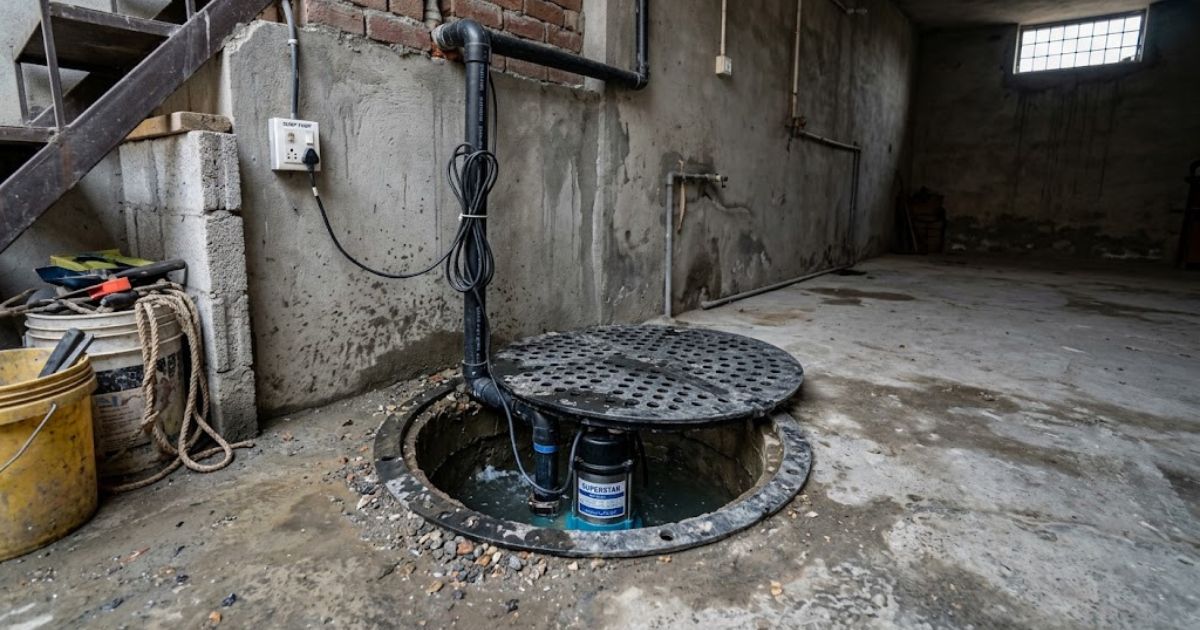
Winter gets the attention for frozen pipes, but spring has its own plumbing season, and it's built around one specific piece of equipment most homeowners never think about until it fails: the sump pump. A winter's worth of accumulated snow doesn't disappear quietly. It melts into the ground over a period of weeks, and that water has to go somewhere.
Maintaining The Pit Itself, Not Just The Pump
Debris in the sump pit can interfere with the float switch or clog the pump's intake, causing exactly the kind of failure that only shows up when the pump is actually needed. Dirt, small rocks, or leftover construction debris from installation are common culprits. A quick visual check of the pit for debris is worth doing alongside the water-bucket test, since a clean pit is part of what keeps the mechanical test result meaningful going forward.
The Discharge Line Matters Too
A sump pump is only as good as where it actually sends the water. A discharge line that empties too close to the foundation just recirculates the same water back toward the house, defeating the pump's purpose. The line should carry water at least several feet away from the foundation, ideally further, and it's worth checking that the discharge point hasn't become blocked or redirected by landscaping changes since the system was installed.
Primary Vs. Backup: Understanding The Difference
A primary sump pump is the main, always-active unit handling normal water intrusion. A backup system, whether battery-powered or water-powered, exists specifically for the scenario where the primary fails or loses power at the exact moment it's needed most. Homes that have never invested in a backup are betting that a primary failure won't coincide with a major water event, which is a real gamble given that power outages and heavy precipitation often happen together during the same storm systems.
Why Spring Is Genuinely Different From Other Seasons
Colorado's Front Range gets meaningful snow accumulation across the winter months. When temperatures rise in spring, that snowpack melts steadily rather than all at once, releasing a real, sustained volume of groundwater into the soil over a period of weeks rather than days. Littleton's clay-heavy soil compounds the issue, since clay drains far more slowly than sandy soil, holding water near the surface and pushing more of it toward foundations than a faster-draining soil type would.
What A Sump Pump Actually Does
A sump pump sits in a pit, usually in a basement or crawlspace, and activates when water rises to a certain level, pumping it away from the foundation before it can flood the space. Most residential systems use a submersible pump, sealed to operate while sitting directly in water, though pedestal pumps with the motor mounted above the pit are also common in older installations. It's a simple mechanical concept, but it only works if the pump itself is functioning, which is exactly the kind of thing that goes unnoticed until the one moment it actually matters.
Not Sure If Your Pump Still Works?
A quick check now beats a flooded basement later.
A Simple Test You Can Run Yourself
Pour a bucket of water into the sump pit and watch what happens. The pump should activate within a few seconds, pump the water out, and shut off cleanly once the pit is empty. If it doesn't activate at all, activates but doesn't clear the water, or shuts off and immediately turns back on in a rapid cycle, something is wrong and it's worth having checked before you actually need it during snowmelt.
Signs Your Pump Won't Survive Spring
A pump that's making grinding or rattling noises during operation is showing mechanical wear that tends to progress, not resolve on its own. A pump older than 7 to 10 years, the standard manufacturer-rated service life, is statistically more likely to fail regardless of how it currently sounds, simply due to normal component wear over time. And a pump that's never been tested since it was installed is a genuine unknown, which is its own kind of warning sign.
Battery Backup: Worth Discussing Before Spring, Not During It
Spring storms are exactly the conditions most likely to knock out power while simultaneously increasing water volume, which is the worst possible combination for a primary sump pump with no backup. A battery backup system keeps a pump running for hours without electricity, and it's a genuinely worthwhile addition for any basement that's ever taken on water, or any home where a flooded basement would mean real financial damage to finished space or stored belongings.
If Prevention Comes Too Late
If a pump failure has already led to standing water, moving quickly matters. Water sitting for more than a day or two creates real risk of further damage to flooring, drywall, and stored items, and getting a mitigation and drying process started promptly limits how much of that damage becomes permanent.
Common Questions
How often should I test my sump pump?
Once before winter and once before spring snowmelt is a reasonable minimum, though testing more often, especially after any storm, is never a bad idea.
Why does my pump run constantly even when it's not raining?
Constant cycling usually points to a failing check valve or a stuck float switch, not the pump actually working hard. It's worth having checked rather than assumed normal.
Do I need a sump pump if I've never had water in my basement?
If your home has a sump pit already installed, it's there because the builder or a previous owner determined the risk was real enough to warrant one. An unused pit with no working pump isn't protection, it's a false sense of security.
Is spring worse than summer thunderstorm season for flooding?
Both carry real risk for different reasons. Spring brings sustained snowmelt volume over weeks; summer brings sudden, intense storm bursts. A reliable pump matters in both seasons.
Can I install a sump pump myself?
A straightforward swap of an existing pump into an existing pit is sometimes manageable for an experienced DIYer, but a new pit installation or backup system typically benefits from professional evaluation of your specific basement layout.
If your pump needs attention before spring arrives, our sump pump installation and repair page covers repair, replacement, and battery backup options in more detail. If a failure has already caused water damage, our water damage restoration page covers the cleanup and rebuild process. Homes throughout Columbine, many with basements dating from the same 1960s building era, are worth a proactive sump pump check given the neighborhood's age and typical foundation depth.