Of all the plumbing problems a homeowner can face, a slab leak is one of the least visible and most misunderstood. There's no dramatic burst, no obvious puddle in most cases, just a slow, hidden leak happening somewhere beneath your foundation. Understanding what it actually is makes the warning signs much easier to recognize.
Why Slab Leaks Are More Common In Certain Soil Types
Expansive clay soil, common throughout the Front Range, swells when it absorbs moisture and contracts as it dries. This repeated movement puts real mechanical stress on any pipe embedded in or running beneath a concrete slab. Over years, that stress can create small stress points in pipe joints that eventually develop into leaks, independent of the pipe material's own aging process. This is part of why slab leaks show up with real regularity across this specific region rather than being a rare, isolated occurrence.
Why Foundation Type Matters
Not every home has supply lines running through its slab. Homes with a basement or a raised crawlspace foundation typically route plumbing through accessible spaces rather than embedding it in concrete, which means slab leaks specifically apply to homes built on a slab-on-grade foundation or those with plumbing embedded in a basement floor slab. Knowing your home's foundation type is a useful first filter for understanding whether this specific risk applies to you at all.
Insurance And Slab Leaks: What's Usually Covered
Homeowners insurance often covers the cost of accessing and repairing the leak itself, since it's considered sudden and accidental damage, but coverage details vary significantly by policy and insurer. Cosmetic repairs to flooring or drywall affected by the leak may fall under a separate part of your policy, and it's worth reviewing your specific coverage or asking your insurer directly rather than assuming a slab leak is automatically fully covered.
What To Do If You Suspect Mold From A Slab Leak
If you notice a persistent musty odor alongside any of the warning signs above, avoid disturbing the area further. Have both the leak and any visible growth assessed professionally rather than attempting cleanup yourself. Addressing the water source first is essential, since any mold treatment without stopping the underlying leak will only need to be repeated.
What A Slab Leak Actually Is
Many homes, especially those built with a poured concrete foundation, have water supply lines running underneath or embedded within that concrete slab. When one of those lines develops a leak, whether from age, corrosion, or ground movement pressing against the pipe, the water has nowhere obvious to go. It seeps into the concrete and surrounding soil rather than pooling visibly the way a leak under a sink would.
Why Older Copper Lines Are Especially Vulnerable
Copper pipe was the standard for decades and is generally durable, but certain soil conditions accelerate corrosion from the outside of the pipe. This process, called electrolysis or galvanic corrosion, happens when copper sits in contact with soil carrying certain mineral compositions. Homes with copper supply lines that are several decades old are statistically more likely to develop a slab leak than newer PEX installations, which don't corrode the same way.
Suspect A Slab Leak?
Non-invasive detection before any digging.
The Warning Signs Worth Knowing
An unexplained spike in your water bill, with no corresponding increase in actual usage, is one of the most common early indicators. A warm spot on the floor, particularly noticeable if the leak is on the hot water line, is another classic sign, especially in a room where no radiant heating exists to explain it otherwise. The sound of running water when every fixture in the house is off is worth investigating immediately rather than dismissing.
Less commonly, you might notice a damp patch on the flooring itself or a mildew smell in a room with no obvious source. Even a slight, unexplained buckling in flooring material like laminate or hardwood can be a sign, caused by moisture working its way up through the slab over time.
How Professionals Actually Find A Slab Leak
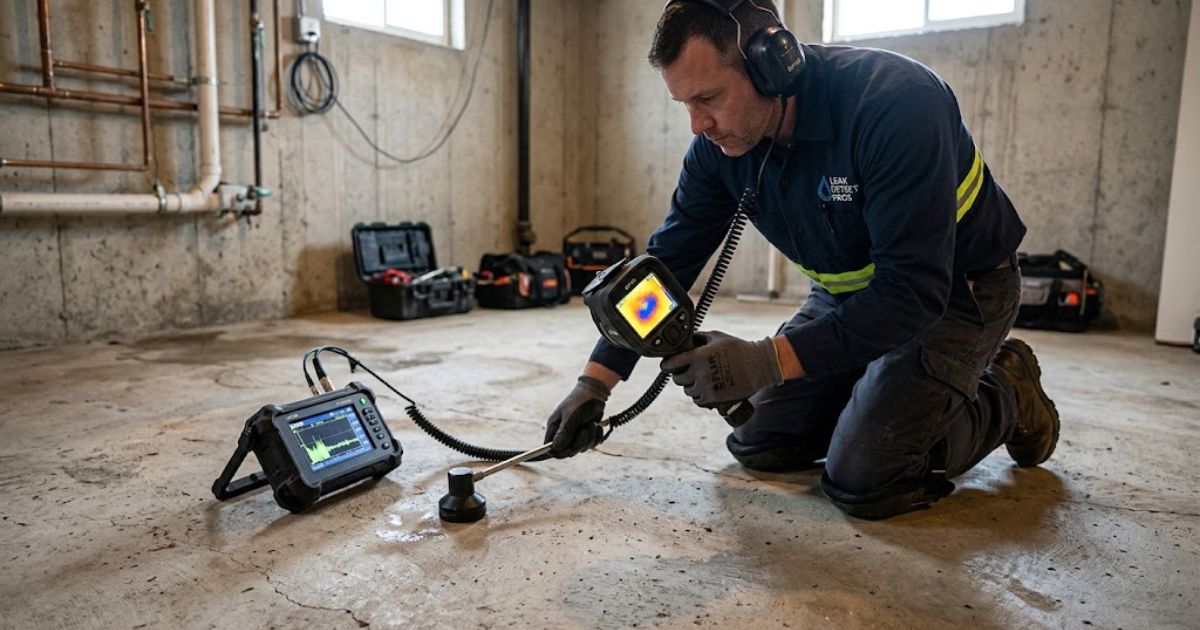
Modern slab leak detection doesn't require guessing where to dig. Acoustic listening equipment picks up the specific sound signature of water escaping under pressure, and technicians can pinpoint a leak's location along a pipe run with real precision. Thermal imaging is sometimes used alongside acoustic methods, since an active leak often creates a detectable temperature difference in the surrounding concrete. This combination means a repair can target a specific, confirmed location rather than opening up a large section of flooring on a guess.
Why Waiting Rarely Helps
A slab leak doesn't heal itself or slow down on its own. The water flow continuing at the leak point means the water bill keeps climbing and the surrounding concrete and soil keep absorbing moisture the entire time the leak goes unaddressed. Homeowners sometimes delay because the visible signs seem minor, a slightly warm spot, a modest bill increase, but the underlying leak is often more significant than the surface signs suggest.
Repair Options: Not Always What People Expect
Depending on the leak's location and the pipe's overall condition, a plumber might repair just the damaged section, which involves accessing that specific point in the slab. Alternatively, rerouting the line entirely, running new pipe through walls or ceilings rather than back through the slab, avoids disturbing the foundation at all and is often preferred when the existing line shows other signs of age. Neither option is automatically better. It depends on the specific leak, the age of the surrounding plumbing, and what makes sense for that particular home.
Common Questions
How urgent is a suspected slab leak?
It's worth addressing promptly, since ongoing water intrusion into a foundation can eventually affect structural elements and almost always means a rising water bill in the meantime.
Will detecting a slab leak require breaking up my floor?
Not necessarily. Acoustic and thermal detection methods are non-invasive and pinpoint the location before any digging or demolition begins.
Can a slab leak cause mold?
Persistent moisture under flooring can create conditions for mold growth over time, which is part of why addressing a suspected leak promptly matters beyond just the water bill.
Is rerouting always more expensive than a direct repair?
Not always. It depends on the specific location and accessibility of the leak. Sometimes rerouting is actually simpler than accessing a hard-to-reach point in the slab directly.
Can a slab leak affect my home's foundation?
Prolonged, significant water intrusion into soil beneath a foundation can eventually contribute to settling issues in severe, long-neglected cases, which is another reason prompt attention matters beyond the immediate water bill.
If you're seeing any of these signs, our slab leak detection and repair page covers the detection and repair process in more depth, and our leak detection page covers non-slab leaks elsewhere in your plumbing system. Bow Mar's original 1947-era homes, with decades-old copper supply lines, are a genuine hot spot for exactly this kind of issue in our service area.