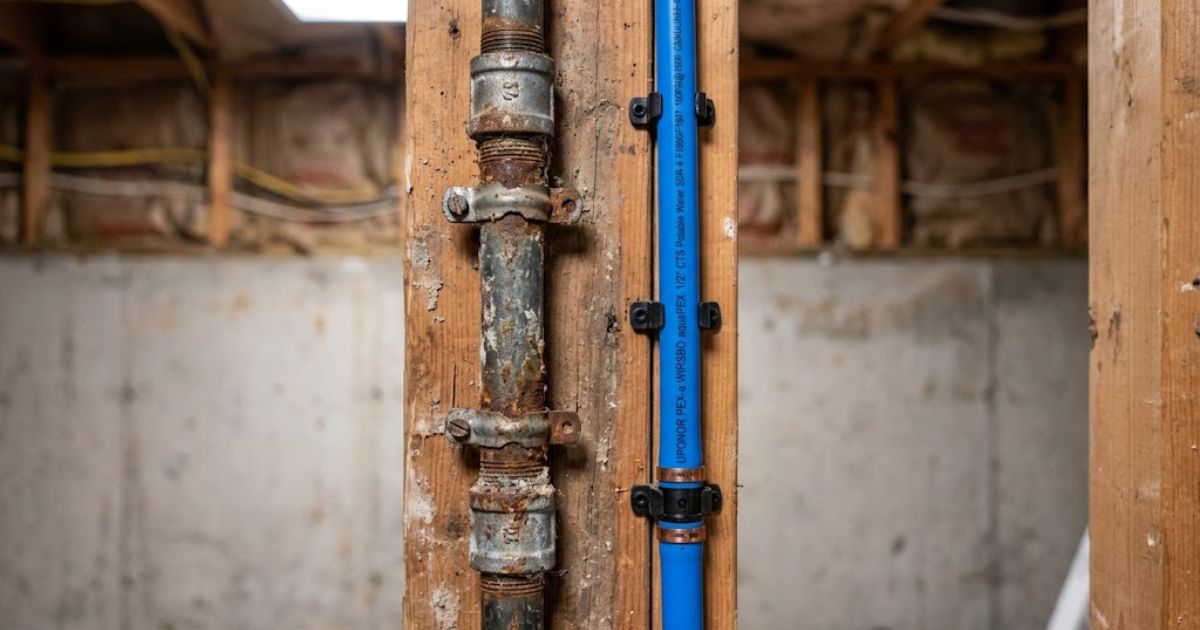
Every homeowner with an aging plumbing system eventually asks the same question after the second or third leak: is it time to just repipe the whole house, or is another repair still the reasonable choice? There's no single answer that applies to every home, but there are real, concrete factors that separate the two decisions.
PEX: The Modern Standard, But Not Without Its Own Considerations
Cross-linked polyethylene, better known as PEX, has become the standard material for new installations and repipes. It resists corrosion entirely, unlike copper and galvanized steel, and its flexibility allows it to be routed through existing framing with fewer joints and connection points than rigid pipe. It's not without any considerations at all. It's more sensitive to UV exposure over long periods and shouldn't be used in direct sunlight, but for standard interior residential plumbing, it's a well-proven, widely trusted upgrade from older materials.
What A Plumber Actually Looks At Before Recommending Either
A thorough assessment includes checking water pressure at multiple fixtures, since a system-wide pressure drop points to broader pipe narrowing rather than a single failure point. Pipe material identification matters too, since galvanized, copper, and PEX all age differently and the recommendation genuinely changes based on which material is actually in your walls. If you've had prior repairs, their location and cause matter as data points, not just history to mention in passing.
What Happens If You Just Wait
Delaying a decision on a system that's clearly failing broadly doesn't stop the underlying deterioration. It just means the next leak happens on its own schedule rather than yours, often at an inconvenient time and sometimes causing water damage that a planned repipe would have avoided entirely. This doesn't mean every aging system needs immediate action, but it does mean the decision is worth making deliberately rather than by default.
What To Do If You Suspect A Water Line Failure
If you notice a sudden, unexplained wet spot, a musty smell, or standing water anywhere near exposed plumbing, shut off the water at the main valve if you can locate it safely. Avoid running any fixtures until the source is confirmed. Getting ahead of a developing leak before it causes broader water damage is part of what makes the repair-versus-repipe decision easier rather than harder.
What "Repiping" Actually Means
A repipe replaces some or all of a home's water supply lines, as opposed to fixing one specific damaged section. It's a bigger job upfront, but it resets the clock on the entire system rather than treating one symptom of a broader age-related problem. A repipe doesn't necessarily mean tearing open every wall in the house. Modern techniques often route new pipe through existing chases, attics, or crawlspaces with far less demolition than homeowners expect.
The Age Factor: When A Repair Stops Making Sense
A single leak in a 10-year-old home is almost always a repair situation, since the rest of the system has plenty of remaining service life. A second or third leak in a 50-plus-year-old home with original galvanized or aging copper supply lines is a different story entirely. At that point, each individual repair is genuinely just delaying the next one, on a system that's failing broadly rather than at one isolated point.
Not Sure Which Your Home Needs?
We'll give you an honest assessment either way.
Pipe Material Matters More Than People Realize
Galvanized steel pipe, common in homes built before the 1960s, corrodes from the inside over decades, gradually narrowing the interior diameter and reducing water pressure even before an actual leak develops. Once galvanized pipe starts failing, it tends to fail at multiple points around the same time, since the whole system has been corroding at a similar rate. This is one of the clearest cases where a repipe genuinely makes more sense than a series of individual repairs on the same failing material.
Older copper, by contrast, can develop isolated pinhole leaks from localized corrosion without the rest of the system being in similarly poor shape. This is part of why copper systems are more often candidates for targeted repair rather than full replacement, at least for longer than galvanized systems typically last.
A Practical Way To Think About It
Repair Usually Makes Sense When
- It's a first or isolated leak.
- The rest of the system is under 30 years old.
- The pipe material is copper or PEX, not galvanized.
- The damage is clearly localized to one section.
Repipe Is Worth Discussing When
- You've had two or more leaks in different spots.
- Your home has original galvanized supply lines.
- Water pressure has dropped noticeably over years.
- The system is approaching or past 50 years old.
Getting A Second Opinion When It's Genuinely Unclear
If the assessment you've received doesn't clearly explain why repair or repipe is being recommended, it's reasonable to ask for that explanation directly. Getting a second opinion is also worth considering, especially for a decision as significant as a whole-home repipe. A good assessment should point to specific, observable factors, pipe material, leak history, water pressure trends, not just a general recommendation without the reasoning behind it.
Cost Isn't As Simple As It Looks
A repipe costs more upfront than a single repair, which makes the repair look like the obvious cheaper choice in isolation. But if a home genuinely needs three or four repairs over the following few years on a failing system, the cumulative cost, plus the disruption of repeated service calls, often exceeds what a single repipe would have cost from the start. This is worth factoring in honestly rather than just comparing the first repair's price against the repipe estimate.
Common Questions
Can I repipe just part of my house instead of the whole thing?
Yes, a partial repipe targeting the most problematic section or material type is a reasonable middle option in some cases, rather than an all-or-nothing choice.
How long does a whole-home repipe actually take?
This varies by home size and access, but many residential repipes are completed within a few days to about a week.
Will I have water during a repipe?
Most repipe projects are done in stages that keep at least some water service available at any given time, though brief interruptions are normal during specific connection points.
Does a repipe increase my home's value?
New plumbing is generally viewed favorably by buyers and inspectors, and eliminating known galvanized pipe can remove a common negotiating point in a future sale.
What happens to the old pipe during a repipe?
Old pipe is typically abandoned in place if it's embedded in a wall or slab, rather than physically removed, since removal would cause unnecessary additional demolition without a real benefit.
If you're facing a decision between another repair and a full repipe, our repiping and whole-home pipe replacement page covers the process in more depth. If the issue is specifically the line running from the street to your home, our water line repair and replacement page covers that separate scope. Columbine Valley's founding-era homes, many with original galvanized supply lines, are a common source of exactly this repair-versus-repipe question in our service area.