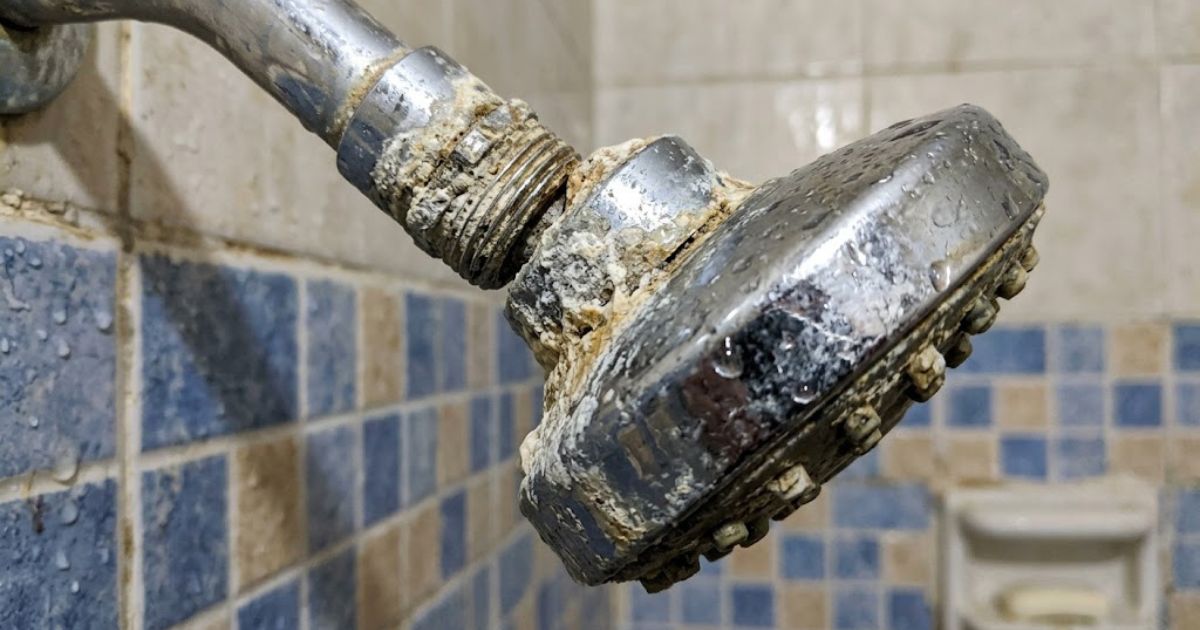
If you've noticed white, chalky buildup around your faucets, spots on dishes fresh out of the dishwasher, or hair and skin that feel different after a shower here than they did somewhere else, you're experiencing hard water. It's not a plumbing defect and it's not something wrong with your specific house. It's a genuine, measurable feature of Front Range water, and understanding it actually helps you make better decisions about your home's plumbing.
What A Water Softener Actually Does, Mechanically
A salt-based softener works through a process called ion exchange. Water passes through a tank filled with resin beads coated in sodium ions, and as calcium and magnesium ions in the water pass by, they swap places with the sodium, effectively removing the hardness minerals from the water before it reaches your taps. Periodically, the system regenerates by flushing the resin bed with a concentrated salt brine, which recharges the beads for the next cycle. This is a well-understood, decades-old technology, not a new or experimental approach.
How Much Does Regional Hardness Actually Vary?
Water hardness isn't uniform even across a single metro area, since it depends partly on which specific source and treatment facility serves a given neighborhood. Some parts of the Front Range test moderately hard, while others test as very hard, and the specific number matters for correctly sizing a softening system. This is part of why a generic online hardness estimate is less useful than an actual test of your specific water.
What "Hard Water" Actually Means
Water hardness is a measure of dissolved calcium and magnesium minerals in the water supply. According to standard water quality guidelines, water is generally considered hard once it crosses around 7 grains per gallon, with very hard water sitting well above that. As water travels through rock and soil on its way to the municipal system, it picks up these minerals, and the more it picks up, the "harder" it's considered.
Why The Front Range Specifically Has Hard Water
Colorado's Front Range sits at the base of the Rocky Mountains, where water sources pick up mineral content from limestone and other calcium-rich rock formations as it flows down from higher elevations. This is a geological reality of the region, not something specific to any one municipal water system, which is why hard water is a shared experience across most of the Denver metro area rather than a problem unique to Littleton.
Tired Of Hard Water's Effects?
We'll size the right system for your home.
What Hard Water Actually Does Over Time
The visible effects, spots on glassware and chalky buildup around fixtures, are the least of it. Inside your plumbing, hard water leaves mineral deposits, commonly called scale, on the interior surfaces of pipes, water heater tanks, and any appliance that heats or moves water. Over years, this buildup narrows pipe diameter, reduces water heater efficiency, and is a documented contributing factor in appliances failing sooner than their expected lifespan.
Water heaters are particularly affected, since heat accelerates mineral precipitation, which is part of why sediment buildup and reduced hot water capacity are such common complaints in this region specifically. The same mineral buildup is also connected to boiler kettling, the banging or rumbling noise some older heating systems make as trapped water overheats around scale deposits inside the heat exchanger.
Soap, Skin, And Hair: The Everyday Signs
Hard water genuinely changes how soap and shampoo behave. Calcium and magnesium ions react with soap to form a less effective lather and leave a slight residue behind, which is why some people notice their skin feels different, sometimes drier, after showering in hard water compared to soft water. This isn't imagined. It's a real chemical interaction between the minerals and the soap itself.
Softening Vs. Filtering: Different Problems, Different Fixes
It's worth being clear that a water softener and a water filter solve different problems, even though people sometimes use the terms interchangeably. A softener specifically removes hardness minerals through an ion exchange process. A filter addresses taste, odor, and sediment, which hardness minerals don't directly cause. If your main complaint is scale buildup and soap not lathering, that's a softening problem. If your main complaint is chlorine taste or smell, that's a filtration problem, and the two are often worth addressing together rather than assuming one system solves both.
What A Grains-Per-Gallon Number Actually Tells You
Water hardness scales roughly like this. Under 1 grain per gallon is considered soft, 1 to 7 grains is moderately hard, and above 7 grains is hard, with some Front Range areas testing well above 10 grains per gallon in certain seasons. The exact number matters for correctly sizing a softener, since an undersized system for genuinely very hard water will regenerate too often and wear out faster than one sized appropriately from the start.
Is It Worth Doing Anything About It?
That depends on how much the effects bother you and how much you want to protect your plumbing and appliances long-term. Hard water won't make your water unsafe to drink, and plenty of homeowners simply live with it. But if you're replacing water heaters more often than seems reasonable, or scale buildup has become a genuine daily annoyance, a softener is a real, well-understood solution rather than a luxury upgrade.
What To Do Before Assuming It's Just Hard Water
Before attributing every water quality complaint to hardness, rule out a few other possibilities. A sudden change in taste or color, rather than a gradual one, is more likely tied to a specific event like nearby construction or a water main repair than to ordinary hardness. If discoloration or odor is new and sudden rather than a slow, familiar pattern, it's worth calling your water utility to check for any known local issue before assuming it's the same hardness you've always had.
Common Questions
Is hard water unsafe to drink?
No, hard water is generally safe to drink. The minerals that cause hardness, calcium and magnesium, aren't a health concern at typical levels and are sometimes even considered a minor dietary benefit.
How do I know how hard my water actually is?
A water softener installer can test your specific water hardness, or you can request water quality reports from your local water utility, which typically publish hardness levels for their service area.
Will a softener fix my water heater problems?
A softener prevents future scale buildup, but it won't reverse damage already done to an existing water heater. If your water heater is already showing reduced capacity, that's a separate repair or replacement conversation.
Does hard water affect my dishwasher and washing machine too?
Yes, both appliances are affected by scale buildup the same way water heaters are, and many manufacturers note reduced appliance lifespan in hard water areas without softening.
If you're ready to actually address hard water in your home, our water softener installation and repair page covers sizing and system types in more depth, and our water filtration installation page covers taste and odor separately. Homeowners throughout Ken Caryl deal with the same Front Range water hardness as the rest of our service area, regardless of which local water district serves their specific street.