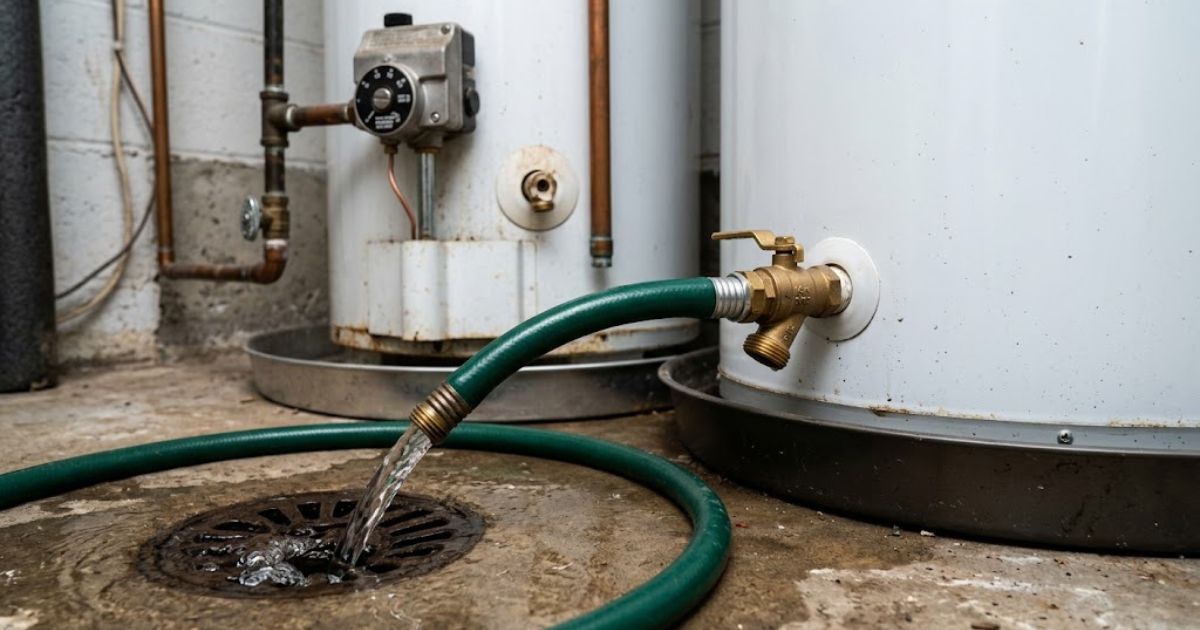
Water heater flushing is one of those maintenance tasks everyone's heard they should do, but the actual recommended frequency varies significantly depending on who you ask, and it genuinely does depend on several factors specific to your particular home. Here's a straight answer, with the reasoning behind it.
A Simple Way To Check Sediment Without A Full Flush
Draining just a gallon or two from the tank's drain valve into a clear container gives you a rough visual check. Clean or slightly cloudy water suggests the tank is in reasonable shape. Visible grit, sand-like sediment, or noticeably discolored water is a clear sign a full flush is overdue, even if you're not certain exactly how long it's been since the last one. This quick check takes only a few minutes and requires no special tools beyond a container and access to the drain valve itself.
What Flushing Actually Does
Flushing a water heater means draining the tank fully, which removes sediment that settles at the bottom over time. This sediment comes primarily from mineral content in your water supply, and it accumulates faster in hard water areas than in naturally soft water regions. Left unaddressed, sediment buildup insulates the bottom of the tank from the heating element or burner, forcing the unit to work harder and burn more energy to heat the same amount of water.
The General Recommendation, And Why It's Not Universal
Most manufacturers recommend flushing a tank water heater annually as a baseline. But that's a generic recommendation written for an average water supply, not specifically for the Front Range's harder-than-average water. In a genuinely hard water area, sediment accumulates measurably faster, and annual flushing may not be frequent enough to prevent noticeable performance loss between service visits.
Not Sure When Your Tank Was Last Flushed?
We can check and flush it during one visit.
Signs Your Tank Is Overdue Right Now
A rumbling or popping sound during the heating cycle is one of the clearest indicators, caused by water trapped under a sediment layer turning to steam and escaping with an audible pop. Reduced hot water capacity, where the tank seems to run out faster than it used to, is another sign, since sediment buildup effectively shrinks the tank's usable volume. If it's been longer than a year, or you're noticing either of these signs, that's a reasonable trigger to schedule a flush regardless of the calendar.
Tankless Units Have Their Own Flushing Schedule
Tankless water heaters don't accumulate sediment the same way tank units do, but they do develop mineral scale on the heat exchanger from hard water, requiring a different maintenance process called descaling rather than a traditional flush. Most manufacturers recommend annual descaling in hard water regions, using a specific pump-and-solution process rather than simply draining the unit the way you would a tank. Skipping this maintenance on a tankless unit can shorten its otherwise longer expected lifespan considerably.
Does A Water Softener Change The Answer?
Yes, meaningfully. A home with a properly functioning water softener sees dramatically less mineral sediment accumulation, since the hardness minerals that create sediment are largely removed before they reach the water heater at all. Homes with softeners can often extend flushing intervals beyond the standard annual recommendation, while homes without one, especially in a hard water region, are better served sticking closer to that annual baseline or even flushing more often if warning signs appear sooner.
What Happens During A Professional Flush Beyond Just Draining
A thorough professional visit typically includes checking the anode rod, a sacrificial metal rod that attracts corrosion away from the tank itself and needs periodic replacement. It also includes testing the pressure relief valve for proper function and inspecting for any early signs of tank body corrosion. These additional checks catch developing issues well before they become the kind of warning signs covered earlier in this guide.
What Happens If You Never Flush At All
Sediment buildup doesn't just reduce efficiency gradually. Over years of accumulation, especially in areas with genuinely hard water, sediment layers can become thick enough to trap significant heat, accelerating tank corrosion from the inside and shortening the water heater's overall service life. A tank that's never been flushed in 8 or 9 years is a real candidate for reduced remaining lifespan compared to an identical unit that's been maintained on schedule.
Can You Flush It Yourself?
Flushing is a manageable DIY task for some homeowners: connect a hose to the drain valve, shut off the cold water supply and the heating element or gas burner, and drain the tank fully before refilling. That said, valves on older tanks sometimes fail to reseal properly after being opened, and a professional flush includes a broader check of the anode rod, pressure relief valve, and overall tank condition that a basic DIY flush doesn't cover.
Common Questions
Will flushing fix a water heater that's already making noise?
Often it helps significantly, especially if the rumbling is from moderate sediment buildup. If the tank is much older or the noise persists after flushing, that points toward a bigger issue worth a full assessment.
Is it too late to flush a tank that's never been flushed?
Not necessarily, though a tank that's gone many years without maintenance may have more sediment than a routine flush fully clears, and a professional assessment can determine whether flushing alone is still worthwhile.
Does flushing void my water heater's warranty if I do it myself?
Most manufacturers don't require professional flushing to maintain warranty coverage, but check your specific unit's documentation, since terms vary by manufacturer and model.
How long does a professional flush actually take?
A standard flush typically takes 30 to 60 minutes, depending on tank size and how much sediment has accumulated.
Can hard water sediment void my water heater's warranty?
Some manufacturers do require documented regular maintenance for full warranty coverage, particularly in known hard water regions, so keeping a simple record of flush dates is worth doing regardless of who performs the service.
If your water heater is overdue for a flush or already showing warning signs, our water heater repair page covers diagnosis and service in more detail. If hard water is a recurring issue across your whole home, our water softener installation and repair page covers the longer-term fix that addresses the root cause. Columbine's original water heaters, many dating from the same 1960s building era, are a common source of exactly this maintenance question in our service area.