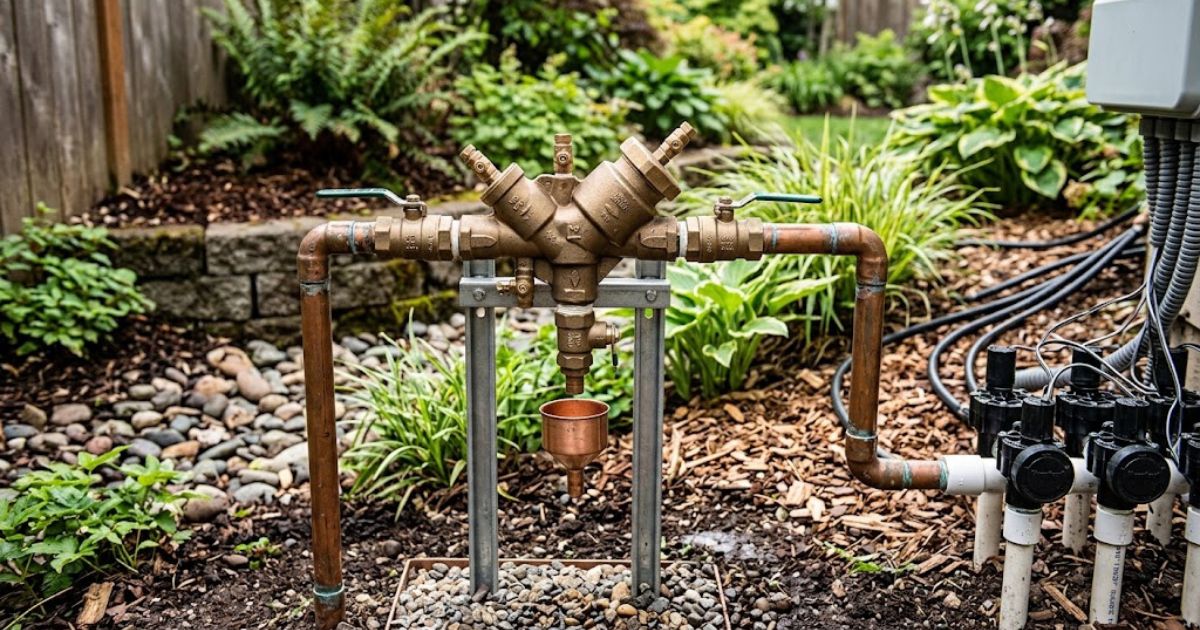
If you've gotten a notice from your water utility about an overdue backflow test, it's easy to assume it's a bureaucratic formality you can ignore. It isn't. Here's what backflow testing actually protects against, who it applies to, and what happens if you skip it.
Why Utilities Take This So Seriously
A shared municipal water system serves potentially thousands of homes from the same source infrastructure, which means a contamination event at one property has the potential to affect water quality far beyond that single address. This shared-risk structure is exactly why backflow prevention isn't treated as an optional homeowner preference. It's treated as a genuine public health safeguard with real regulatory teeth behind it.
What To Do If You Suspect Contaminated Water
Stop using tap water for drinking or cooking if you notice an unusual taste, color, or odor right after irrigation or lawn chemical application, and contact your water utility to report it. A backflow event is rare with a working, tested preventer, but worth ruling out quickly rather than assuming it's unrelated to a nearby chemical application.
What A Backflow Preventer Is Actually Protecting
Your home's plumbing connects to a shared municipal water supply that serves your entire neighborhood. Under normal conditions, water flows one direction: from the municipal main into your home. A backflow preventer exists to make sure it stays that way. Certain conditions, like a sudden pressure drop from a water main break or heavy firefighting demand nearby, can theoretically reverse that flow and pull water backward out of your home's system and into the shared supply.
That backward flow is the real risk. If your irrigation system, boiler, or any other connection has fertilizer, chemicals, or stagnant water sitting in it, a backflow event could pull that contamination into the water main that serves your entire neighborhood, not just your own house.
Why Irrigation Systems Are The Most Common Trigger
Residential irrigation systems are the single most common reason homeowners encounter a backflow testing requirement, since lawn and garden irrigation lines are considered a contamination risk due to fertilizer and pesticide exposure. If you have an in-ground sprinkler system, there's a good chance a backflow preventer was installed as part of that system, and testing it annually is very likely a real, enforced requirement in your specific jurisdiction.
Got A Testing Notice?
We handle certified testing and file the paperwork.
Who Else Needs This Beyond Irrigation
Boilers and other hydronic heating systems, fire sprinkler systems, and any commercial connection involving process water or chemicals typically require their own backflow prevention device and testing schedule. Commercial properties often have multiple devices covering different connections, each needing separate annual certification, which is a meaningfully bigger compliance picture than a single residential irrigation device.
What Actually Happens During A Test
A certified tester connects calibrated gauge equipment to the backflow device and checks whether its internal check valves and, on reduced-pressure-zone assemblies, the relief valve are functioning within required tolerances. Most residential tests take well under an hour. The tester then files the results directly with your water utility, which is what actually satisfies the compliance requirement, not just having the test performed. Keeping your own copy of the test results is also a reasonable practice, since it gives you a record independent of the utility's own filing system.
What Happens If You Skip It
Water utilities in most Colorado jurisdictions can and do restrict or shut off water service for properties that fall out of compliance with backflow testing requirements. An untested device is treated as an unverified risk to the shared water supply. This isn't an empty threat used to encourage compliance. It's a real enforcement mechanism utilities use specifically because the underlying risk, however statistically rare, is genuine.
The Two Main Device Types You'll Encounter
Reduced pressure zone assemblies offer the strongest protection and are commonly required for higher-hazard connections, actively venting to the atmosphere if either of their two internal check valves fails. Double check valve assemblies are simpler and commonly used for lower-hazard connections like straightforward irrigation systems. Which type your property has depends on what the connection is and what your local jurisdiction requires for that specific use.
Getting Ahead Of A Failed Winterization
Outdoor backflow devices left exposed during a hard Colorado freeze are one of the most preventable test failures we see year after year. Draining the device and, where applicable, insulating or covering it before the first hard freeze each fall takes only a few minutes but avoids a cracked housing that otherwise means both a failed test and an unplanned repair. If you're not sure whether your specific device needs this kind of seasonal attention, it's worth asking whoever installed or last serviced it.
Common Reasons A Device Fails Its Test
Internal rubber seats and springs wear out over years of normal operation, which is exactly the kind of gradual failure an annual test is designed to catch before it becomes a real problem. Freeze damage to an outdoor device that wasn't winterized before the first hard freeze is another common failure cause specific to Colorado's climate, since a cracked housing from freezing is both common and entirely preventable with basic seasonal care.
Common Questions
How do I know if I have a backflow preventer?
If you have an irrigation system, a boiler, or a fire sprinkler system, you very likely have one. It's typically a visible device with test cocks near where the relevant line connects to your main water supply.
Can I test my own backflow device?
No, testing requires a certified tester with calibrated equipment, and results generally need to be filed directly with your water utility to count toward compliance.
What if my device fails the test?
A failed device needs to be repaired or replaced before compliance is restored, and a certified tester can typically perform the needed repair as part of the same visit or a prompt follow-up.
Does a new home automatically have backflow devices already installed?
Most new construction with irrigation systems includes a backflow preventer as part of the original installation, but it's still your responsibility to schedule the required annual testing going forward.
Who typically pays for backflow testing, the homeowner or the utility?
The property owner is generally responsible for scheduling and paying for testing on their own device, even though the requirement itself is set and enforced by the water utility.
If you've received a testing notice or need a new device installed, our backflow testing and prevention page covers the process and requirements in much more depth. If your property is a business with additional plumbing compliance needs, our commercial plumbing page covers that broader picture. Chatfield Bluffs' newer homes and condos, many with irrigation systems as part of their original landscaping, are a common setting for exactly this compliance question in our service area, alongside similar irrigation setups throughout the rest of our coverage.